





Teflon® Coatings
The Impreglon Group is a licenced Teflon® applicator and is the first choice should such coatings be specified or required. All our coatings are applied by us at our dedicated plant near Nottingham.
What is Teflon® coating?
Teflon coatings were Invented at DuPont's Jackson Laboratory in 1938 and over the last several decades have become highly popular. Teflon coatings are the original fluoropolymer coatings. The versatility of these coatings allow application onto a wide variety of substrates, part sizes and configurations.
Teflon coating spray on like paint and bake to a tough, inert finish. By combining heat resistance with almost total chemical inertness, excellent dielectric stability and a low coefficient of friction, Teflon industrial coatings offer a balance of properties.
Is Teflon Coating safe to use?
One of the most common uses of Teflon coating is in non-stick pans, pots and cookware which makes it convenient to use and easy to clean. However there has been controversy over its use with some sources suggesting that Teflon coating is harmful and linked to health conditions such as kidney disease, liver disease and certain types of cancers, whilst others say it is completely safe.
The main concerns centred on a chemical used called perfluorooctanoic acid (PFOA) which used to be used to produce non-stick cookware. Most of the PFOA was normally burnt off during the manufacturing process, however sometimes a small amount remained in the final product.
However, in 2006, the PFOA Stewardship Program was launched by the US Environmental Protection Agency (EPA) which spurred the elimination of PFOA from Teflon products. The aim was to eliminate PFOA use by 2015 which was accomplished in 2013 so since then Teflon products have been PFOA-free.
One other concern has been when Teflon coatings are exposed to high heat (above 300 degrees Celsius) the compound can start to break down, releasing toxic chemicals into the air which when inhaled can cause polymer fume fever - a temporary condition that has flu-like symptoms. However, in all cases this was due to being exposed to fumes from overcooked Teflon® cookware at extreme temperatures of close to 400 degrees Celsius and they were also exposed for longer than four hours.
In summary, Teflon coating makes cookware more convenient, it is safer since the removal of PFOA from Teflon® products and provided common sense cooking practice are followed exposure to fumes can be avoided.
Uses of Teflon coating
Chemours (formerly known as DuPont) Teflon industrial coatings can be used on carbon steel, aluminium, stainless steel, steel alloys, brass and magnesium as well as non-metallics such as glass and carbon fibre, some rubber and plastics. Optimum adhesion is usually obtained by roughening the surface before applying the coating.
While most people think of skillets and pots when they think of Teflon coated, attributable to a variety of coating types, the unique properties of Chemours Teflon industrial coatings can become an integral surface component on any kind of part. From clutches that engage easier and valves that resist wear, to coil springs that become silent. In testing, it has been shown a PTFE coating performs far better than other coatings, such as nylon and acetal. With the application of teflon and processing equipment, industrial coatings can even be placed on specific areas of complex geometric parts, such as the internal threads of a nut.
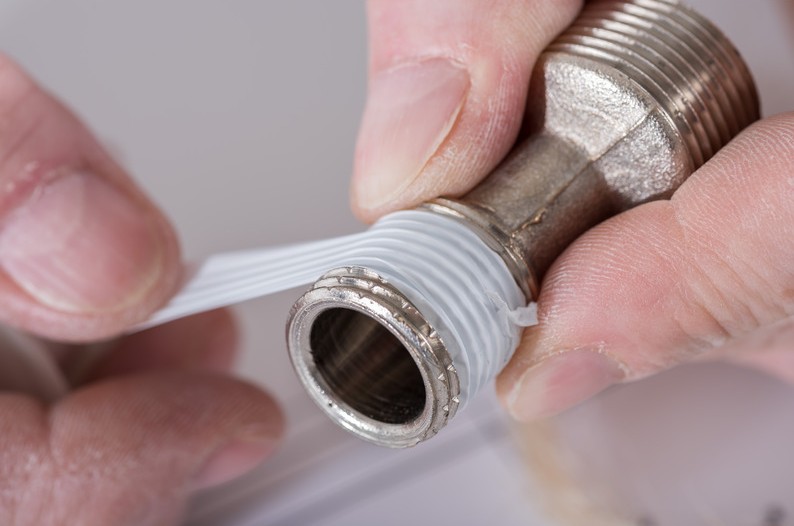
Properties of Teflon® Coating
Nonstick
Very few solid substances will permanently adhere to a Teflon® finish. Although tacky materials may show some adhesion, almost all substances release easily.
Low Coefficient of Friction
The CoF of Teflon® coatings is generally in the range of 0.05 to 0.20, depending on the load, sliding speed, and the particular Teflon® coating used.
Non-wetting
Since surfaces coated with Teflon® are both oleophobic and hydrophobic, they are not readily wetted. Cleanup is easier and more thorough and, in many cases, surfaces are self-cleaning.
Heat Resistance
Teflon® industrial coatings can operate continuously at temperatures up to 260°C.
Unique Electrical Properties
Over a wide range of frequencies, Teflon® coatings have high dielectric strength, low dissipation factor, and very high surface resistivity. By special techniques, these non-conductive coatings can be made electroconductive enough to be used as a static dissipative or conductive coating.
Cryogenic Stability
Many Teflon® industrial coatings withstand severe temperature extremes without loss of physical properties. Teflon® industrial coatings may be used at temperatures as low as -270°C.
Chemical Resistance
Teflon® coatings are normally unaffected by chemical environments. The only chemicals known to affect all Teflon® industrial coatings are molten alkali metals and highly reactive fluorinating agents.
Advantages of Teflon® coating:
- Unaffected by almost all chemicals
- Continuous use at high temperatures
- Slippery non-stick surface
- Outstanding dielectric properties
- Improved resistance to cold flow or creep
- Reduction in wear and friction
- Improved dimensional stability
- Increased stiffness and surface hardness
- Improve your product as it will release more easily.
- Save money as you won't need to replace your parts or equipment as often.
- Have less waste as your equipment will be much easier to clean.
Types of Teflon® coating
1. Teflon PTFE
PTFE (polytetrafluoroethylene) nonstick coatings are usually two-coat (primer/topcoat) systems. These products have the highest operating temperature of any fluoropolymer (260°C) an extremely low coefficient of friction, good abrasion resistance, and good chemical resistance. Most included in teflon sheets, PTFE is available only in water based liquid forms.
2. Teflon FEP
FEP (fluorinated ethylene propylene copolymer) non-stick coatings melt and flow during baking to provide nonporous films. These Teflon® coatings provide excellent chemical resistance. In addition to low friction, FEP coatings have excellent nonstick properties. Maximum use temperature is typically 200°C. FEP is available in water-based liquid and powder forms.
3. Teflon PFA
Like FEP, PFA (perfluoroalkoxy) nonstick coatings melt and flow during baking to provide nonporous films. PFA offers the additional benefits of high temperatures (260°C), higher film thicknesses and greater toughness than PTFE or FEP. This combination of properties makes PFA an excellent choice for a wide variety of uses, especially those involving heat resistance. PFA is available in both water-based liquid and powder forms.
4. Tefzel ETFE
ETFE is a copolymer of ethylene and tetrafluoroethylene and is also sold under the Tefzel® trademark. Although not fully fluorinated, ETFE has excellent chemical resistance and can operate continuously at 150°C. This resin is the toughest of the fluoropolymers and can be applied at film builds up to 1000 microns to provide a highly durable finish. ETFE is available in powder form.
5. Teflon One Coat
These solvent-based liquid coatings are formulated with special blends of fluoropolymers and other high-performance resins to improve toughness and abrasion resistance. Because the film components stratify during baking, most of the fluoropolymer properties (such as low friction and nonstick character) are retained. The resins provide adhesion and abrasion resistance. These products can sometimes be applied to smooth, clean metal. Bake requirements vary, depending on the specific coating.
6. Teflon Dry Lubricant
Dry lubricant coatings are special versions of Teflon® technology designed to provide lubrication under high-pressure/velocity (PV) conditions. These products are solvent-based, one-coat systems.
Tailoring Teflon coating to UK Businesses
At Impreglon, we understand that each industry and business in the UK has its unique requirements. Our licensed Teflon applicators work closely with our clients to customize coatings that cater to their specific needs. Whether it's enhancing the performance of automotive components or ensuring the reliability of critical electrical connections, Impreglon applies teflon coatings tailored to you.
For more information please complete our online form and we will get back to you as soon as possible.